
My Ex Left Me After Giving Me Herpes. How Do I Move On?
Finding out that you have herpes can already feel overwhelming. Many people experience fear, sadness, anger, confusion, and uncertainty about what the diagnosis means for their future. But when the person you trusted most is also the person connected to your diagnosis—and then they leave—you may feel like you are dealing with two painful losses at the same time.
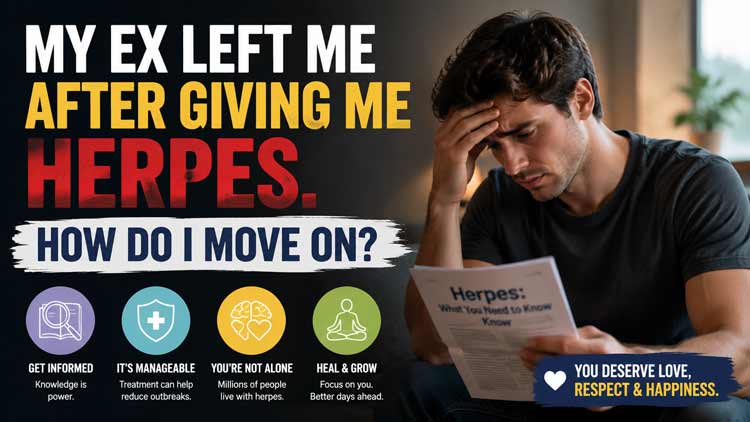
You are not only processing a health diagnosis. You are grieving the end of a relationship, questioning someone’s choices, and trying to rebuild your confidence after feeling rejected. Many people in this situation find themselves asking: “How could someone who loved me leave me after this?” “Will anyone accept me now?” “How do I move forward when my ex changed my life and walked away?”
The emotional pain after a herpes diagnosis caused by a partner can be intense, but it does not have to define your future. A herpes diagnosis is a manageable health condition, not a measure of your worth, your attractiveness, or your ability to have a loving relationship. Moving on requires healing from the betrayal, separating your identity from the diagnosis, and learning to believe that your life and relationships can still be meaningful.
The Emotional Impact of Being Left After a Herpes Diagnosis
When an ex leaves after giving you herpes, the pain often feels different from a normal breakup. A breakup already involves losing someone you cared about, but this situation may also involve feelings of injustice. You may feel that you were left carrying a burden that you never expected to have.
Many people describe experiencing a mix of emotions such as anger, sadness, embarrassment, loneliness, and even shame. You might replay conversations in your mind, wondering whether your ex knew they had herpes, whether they should have told you, or whether they avoided responsibility after learning what happened.
These feelings are understandable. A herpes diagnosis can challenge your sense of safety and trust. The person who was supposed to be your emotional support may have become the source of your deepest hurt.
However, healing begins when you recognize that your ex’s actions do not determine your value. Someone leaving after a difficult situation often says more about their ability to handle responsibility, communication, and emotional challenges than it says about you.
You Are Grieving More Than the Relationship
One reason this experience can feel especially painful is that you may be grieving multiple things at once. You may miss your ex, but you may also miss the version of your future you imagined before the diagnosis.
Before herpes entered the picture, you may have imagined building a life with your partner, traveling together, getting married, starting a family, or simply continuing the relationship you thought was secure. After the breakup, it can feel like those dreams disappeared overnight.
This type of grief is real. It is not only about losing a person; it is about adjusting to a new reality. Allow yourself time to process these emotions instead of forcing yourself to “get over it” quickly.
Healing does not mean pretending that nothing happened. It means accepting that something painful happened while choosing not to let it control the rest of your life.
Was Your Ex Responsible for Giving You Herpes?
A common question after this experience is whether an ex should be held responsible for transmitting herpes. The answer depends on the specific circumstances.
Some people transmit herpes without knowing they have it because many infections cause mild symptoms or no noticeable symptoms at all. Others may know they have herpes and fail to disclose that information before sexual contact. The emotional impact can be especially severe when someone believes their partner was aware of the risk but did not communicate honestly.
Regardless of how transmission happened, your healing journey should focus on what you can control now. You cannot change the past or force someone else to take accountability. You can, however, choose how you care for yourself moving forward.
Holding onto anger can feel like a way of protecting yourself, especially when you feel betrayed. But over time, constant anger can keep you emotionally connected to the person who hurt you. Moving forward does not mean excusing their behavior. It means refusing to allow their actions to take away your peace.
Separate Herpes From Your Identity
One of the biggest emotional challenges after a herpes diagnosis is the fear that your life has changed forever. Many people immediately imagine rejection, loneliness, or never finding love again.
These fears are common, but they are not the reality for most people living with herpes. Millions of people around the world have herpes, and many continue to have healthy relationships, marriages, and fulfilling dating experiences.
Herpes is a virus, not a personality trait. It does not make you less kind, less attractive, less deserving of love, or less capable of being a good partner.
Your diagnosis is one part of your life story. It is not the entire story.
Many people who initially feel devastated after diagnosis later describe it as a turning point that helped them develop stronger communication skills, healthier boundaries, and deeper self-acceptance.
Allow Yourself to Feel Angry, But Do Not Stay Stuck There
Anger is a natural response when you feel betrayed. You may feel angry that your ex did not protect you, angry that you have to deal with medical appointments or disclosure conversations, or angry that they seem able to move on while you are struggling.
Suppressing anger usually does not make it disappear. Instead, it can help to acknowledge it and understand what it represents. Often, anger is connected to deeper feelings such as hurt, fear, disappointment, or grief.
You can validate your own experience without allowing anger to become your permanent emotional home.
Some people find healing through journaling, talking with trusted friends, therapy, support communities, exercise, or creative activities. The goal is not to forget what happened. The goal is to stop the experience from controlling your daily life.
Do Not Let Your Ex’s Rejection Become Your Own Rejection of Yourself
After being left, many people internalize the rejection. They begin thinking:
“Nobody will want me now.”
“My dating life is over.”
“I am damaged.”
These thoughts can feel convincing when you are hurting, but they are emotional reactions—not facts.
Your ex leaving does not prove that you are unlovable. It proves that one person chose to leave during a difficult moment.
A future partner will not see you only through the lens of herpes. They will see your personality, your humor, your kindness, your values, your goals, and everything else that makes you who you are.
The right relationship is built on honesty, respect, and acceptance. A person who truly cares about you will understand that herpes is a health condition that can be managed, not a reason to reject someone.
Learn How to Trust Again After Betrayal
One of the hardest parts of this experience may not be herpes itself. It may be the loss of trust.
You trusted someone with your body and your emotions. After the relationship ended, you may wonder whether you can trust future partners.
This fear is normal. Betrayal can make people build emotional walls because they are trying to protect themselves from being hurt again.
However, protecting yourself does not mean closing yourself off forever. Healthy relationships require vulnerability, but vulnerability works best when combined with communication and boundaries.
Moving forward, you can become more intentional about conversations around sexual health. You can ask questions, discuss testing, and have honest conversations before becoming intimate with someone.
Your experience may have changed how you approach relationships, but it can also help you build healthier ones.
When Should You Start Dating Again After a Herpes-Related Breakup?
There is no universal timeline for dating again after a breakup involving herpes. Some people need weeks, while others need months to emotionally recover.
The important question is not “How long should I wait?” but rather “Am I ready to share my life with someone new?”
You may be ready to date when you no longer see yourself as someone who needs to apologize for existing. You do not need to be completely free of fear, but you should feel confident enough to communicate honestly and handle possible reactions.
Dating again can actually help rebuild confidence. Positive experiences with new people can remind you that you are still desirable, interesting, and capable of forming connections.
How to Tell Someone New You Have Herpes
Disclosure is one of the biggest concerns for people returning to dating after herpes. Many people fear that telling someone will automatically lead to rejection.
While rejection is possible in any relationship, disclosure also creates an opportunity to find people who appreciate honesty and emotional maturity.
A disclosure conversation does not need to feel like a confession. You are sharing health information with someone who may become part of your life.
A calm and confident approach often works best. Explain that you have herpes, share what you know about managing it, and give the other person space to ask questions.
The way you view herpes will influence how others respond. If you approach the conversation with shame and fear, the other person may sense that. If you approach it with honesty and confidence, it communicates self-respect.
Finding Support After Your Ex Leaves
Many people feel isolated after a herpes diagnosis because they worry others will judge them. This isolation can make emotional healing much harder.
Talking with supportive people can remind you that you are not alone. Friends, therapists, support groups, and online communities can provide understanding from people who have experienced similar challenges.
Connecting with others who have gone through herpes-related breakups can be especially helpful because they understand the unique combination of diagnosis, rejection, and emotional recovery.
You do not have to carry the entire experience by yourself.
Focus on the Life You Are Building Now
Moving on does not happen by forcing yourself to stop caring. It happens by gradually creating a life that is bigger than what happened.
Take care of your physical health. Learn about herpes management. Reconnect with hobbies and interests. Spend time with people who make you feel valued. Set goals that remind you that your future still exists.
A breakup can create an identity crisis because so much attention becomes focused on what was lost. Healing requires shifting your attention toward what you are creating.
You are still the same person with the same talents, dreams, and qualities you had before your diagnosis.
Can You Find Love After Someone Gives You Herpes and Leaves?
Yes. Many people find loving, supportive relationships after a herpes diagnosis.
The idea that herpes ends your dating life is one of the most damaging myths surrounding the condition. The reality is that relationships are built on much more than sexual health status.
Emotional compatibility, kindness, communication, trust, and shared values all matter. Herpes may become a conversation you need to have, but it does not eliminate your ability to love or be loved.
Some people even find that their diagnosis leads them toward healthier relationships because they become more intentional about communication and choosing partners.
Your Ex’s Choice Does Not Decide Your Future
Being left after receiving herpes from a partner can feel like your life was divided into “before” and “after.” The pain is real, and recovering may take time.
But the end of that relationship is not the end of your happiness.
Your ex may have been part of your story, but they are not the author of the rest of it. You still have the ability to build meaningful connections, experience love, and create a future that feels fulfilling.
Moving on begins with recognizing that what happened to you is painful, but it is not the definition of who you are.
Herpes is something you live with. It is not something that takes away your ability to live.
Why You Keep Wondering If Your Ex Ever Really Loved You
One of the most painful questions people ask after this type of breakup has little to do with herpes itself. Instead, it is deeply personal: "If they loved me, how could they leave me after giving me herpes?"
This question rarely has a satisfying answer because relationships end for countless reasons, and people often react poorly when faced with guilt, conflict, or responsibility. Some individuals shut down emotionally. Others become defensive or deny accountability. Some even blame the other person because accepting responsibility feels too painful.
Whatever your ex's reasons were, remember that their behavior reflects their coping skills, emotional maturity, and willingness to face difficult conversations. It does not define your value as a partner.
It is also important to remember that people sometimes leave relationships because they cannot handle the emotional consequences of what happened. That choice may feel incredibly unfair, but it is still their choice—not evidence that you were unworthy of love.
You may never receive the apology or explanation you hoped for. Waiting for closure from someone who has already left can keep you emotionally trapped. Healing often begins when you stop expecting your ex to provide the peace they already took away.
Stop Replaying Every Conversation
After a painful breakup, your mind naturally searches for answers. You may replay every argument, every text message, every intimate moment, looking for clues you somehow missed.
This mental replay can become exhausting. Instead of helping you understand the relationship, it often reinforces guilt and self-blame.
You might wonder whether you ignored warning signs, trusted too quickly, or should have asked more questions about sexual health. While reflecting on past experiences can help you make healthier decisions in the future, endlessly replaying the past rarely changes the outcome.
There comes a point where your brain is no longer solving a problem—it is simply reliving the pain.
Whenever you notice yourself revisiting the same memories repeatedly, gently redirect your attention toward something happening in the present. Healing happens in today's choices, not yesterday's regrets.
Forgive Yourself for What You Didn't Know
Many people blame themselves after contracting herpes, especially if they trusted someone who later disappeared.
You may think, "I should have asked more questions," or "I should have insisted on testing," or "I should have seen the red flags."
These thoughts come from hindsight. Looking back with information you did not have at the time creates an unfair standard. Most people enter relationships assuming their partner is being honest. Trust is a normal part of healthy intimacy.
Forgiving yourself does not mean pretending nothing happened. It means acknowledging that you made decisions based on what you believed then, not what you know now.
Growth comes from learning, not from lifelong self-punishment.
Herpes Does Not Eliminate Your Future Family Plans
Another common fear after a diagnosis is whether herpes will prevent you from getting married or having children.
For most people, the answer is no. Millions of individuals with herpes have healthy marriages, healthy pregnancies, and healthy families. Modern medical guidance and antiviral medications make managing herpes during pregnancy and in long-term relationships much easier than many people realize.
If your dream has always included marriage or children, do not assume that dream disappeared because of one diagnosis.
Your future may look different than you expected, but it is still filled with possibilities.
Don't Compare Your Healing Timeline to Your Ex's
Social media can make heartbreak even worse. You may see your ex smiling, traveling, dating someone new, or seemingly living without consequences while you are still struggling emotionally.
Remember that social media rarely reflects reality. People usually share highlights, not guilt, regret, or emotional struggles.
Comparing your healing to someone else's public image only prolongs your own suffering.
Your goal is not to recover faster than your ex. Your goal is to recover fully.
Healing is not a competition. It is a personal process that unfolds differently for everyone.
When Professional Help Can Make a Difference
While many people gradually recover with support from friends and family, others benefit from speaking with a mental health professional.
If you find yourself unable to sleep, experiencing constant anxiety, withdrawing from everyone around you, or feeling hopeless for weeks or months, therapy can provide valuable tools for healing.
Cognitive behavioral therapy, acceptance and commitment therapy, and trauma-informed counseling can all help people challenge negative beliefs, process betrayal, and rebuild self-confidence.
Seeking therapy is not a sign of weakness. It is an investment in your emotional recovery.
Many People Find Better Relationships After Herpes
This may sound impossible while you are grieving, but many people eventually say that their healthiest relationship happened after their herpes diagnosis.
Why? Because the diagnosis often changes how they approach dating.
Instead of ignoring red flags, they become more selective. Instead of avoiding difficult conversations, they communicate openly. Instead of settling for unhealthy relationships, they seek partners who value honesty, compassion, and mutual respect.
The disclosure conversation, while intimidating at first, can actually filter out people who lack empathy and bring emotionally mature partners into your life.
Herpes does not magically improve relationships, but it often encourages healthier relationship habits.
You Are More Than This Chapter
Right now, it may feel like your life story has been permanently divided into "before herpes" and "after herpes." That feeling is understandable, especially when the diagnosis is tied to heartbreak.
But years from now, this chapter may become only one part of a much larger story.
You may discover new strengths you never knew you had. You may build friendships with people who truly understand you. You may meet someone who accepts every part of you without hesitation. You may even find yourself helping someone else through the same experience.
Painful experiences often become the chapters that teach us resilience, empathy, and perspective.
Your diagnosis is not the end of your story. Neither is this breakup.
Final Thoughts
If your ex left after giving you herpes, it is completely understandable to feel devastated. You have experienced two major emotional blows at once: the end of someone you loved and the unexpected challenge of a lifelong health condition. Those experiences can shake your confidence, your trust, and your vision of the future.
But they do not have the power to determine the rest of your life.
Thousands of people who once believed they would never be happy again are now in loving relationships, married, raising children, pursuing careers, traveling, laughing with friends, and living full, meaningful lives. Their diagnosis became part of their history—not the center of their identity.
Your ex may have walked away, but they did not take your future with them.
Take one day at a time. Learn about herpes from reliable medical sources. Build a support system. Be patient with yourself during the grieving process. Most importantly, remember that healing is not about forgetting what happened. It is about believing that what happened does not get to define who you become.
One day, this chapter will no longer be the first thing you think about when you wake up. It will simply be one experience that helped shape a stronger, wiser, and more compassionate version of yourself. And when that day comes, you may realize something important: the person who truly deserves a place in your future is not the one who left, but the person who chooses to stay.